THE HOLE. AN INSURRECTIONARY POETICS
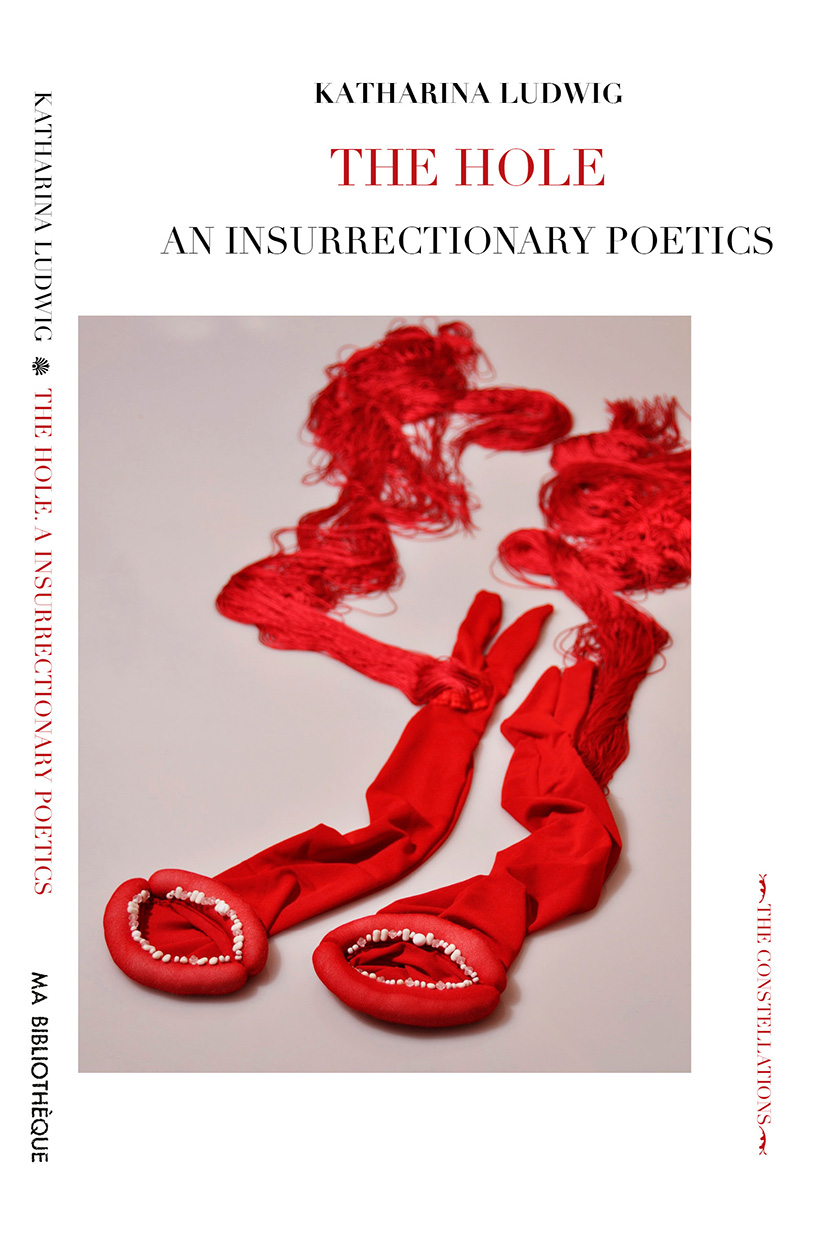
Published by MA BIBLIOTHÈQUE, 2026.
Could a narrative hole, this moment where the text stops, be a text-mouth? We speak of (written) text having a body, a head(ing), foot(notes), a voice. And if there’s a voice there could be a mouth, too. A mouth that speaks/voices into the body of the text. A speaking hole for once, not a gap, a caesura, a lacuna, a wound, but a hole endowed with a voice—or voices.
At the limits of language, a hole opens and voices meet, channelled from the abyss through temporalities and histories. Jacques Lacan analyses the wounded text; Hélène Cixous whispers to anarchist poet Katerina Gogou; theorist Carla Lonzi, artist Chiara Fumai, and her army of women dissidents invade the symbolic realm of father, state, law, and religion. A canon of disorderly voices from philosophy, psychoanalysis, poetry, and fictional characters converse, connected by the appearance of K. The Hole is an epistolary work written in multiple forms, approaching the unsayable in a jouissant textual body, considering broken narratives and minor literatures through an investigation of (textual) holes, wounds (trauma), and the mouth (voice/language). Poetry operates as strategy of resistance and revolt, against systemic power structures and against closure. Wounds must stay open to speak.
‘A defence of bloody openness; a call for the wounds inflicted by political regimes intent on our destruction to stay as they are, wet and wide; an imagining of a language for such wounds—of words that lick to maintain the site’s moisture; ultimately, a refusal of closure, of the healing we are meant to do (and quickly) as care. Katharina Ludwig’s defiantly wounded text makes a thrilling contribution to the discourse on what it means to have and be a dissenting body in the awful here and now.’ –> Gemma Blackshaw
‘The Hole transforms the epistolary form into a jouissant textual body that refuses to heal. Part subversive theory, part pseudo or anti-intimate memoir, this work functions as an unforgiving mouth—a hiatus where the private and the political bleed into one another. Navigating the raw architecture of the breach, Ludwig weaponises poetry as a strategy of permanent revolt. This is a stunning critical work in disguise, inhabiting the epistolary space only to deconstruct and disseminate it through a narrative of multiple yarns.’ –> Ágnes Lehóczky
264 pages
120 mm x 190 mm
80 mm French flaps (cover)
Format: Paperback
ISBN: 978-1-7385079-9-3
Publication date: 1 May 2026
The Hole. An Insurrectionary Poetics is interrupted by three opuscules–The Oracle of Lips, The Oracle of Tongue, and The Oracle of Teeth—published in parallel by Cutt Press.
The Oracle of Lips // The Oracle of Tongue // The Oracle of Teeth
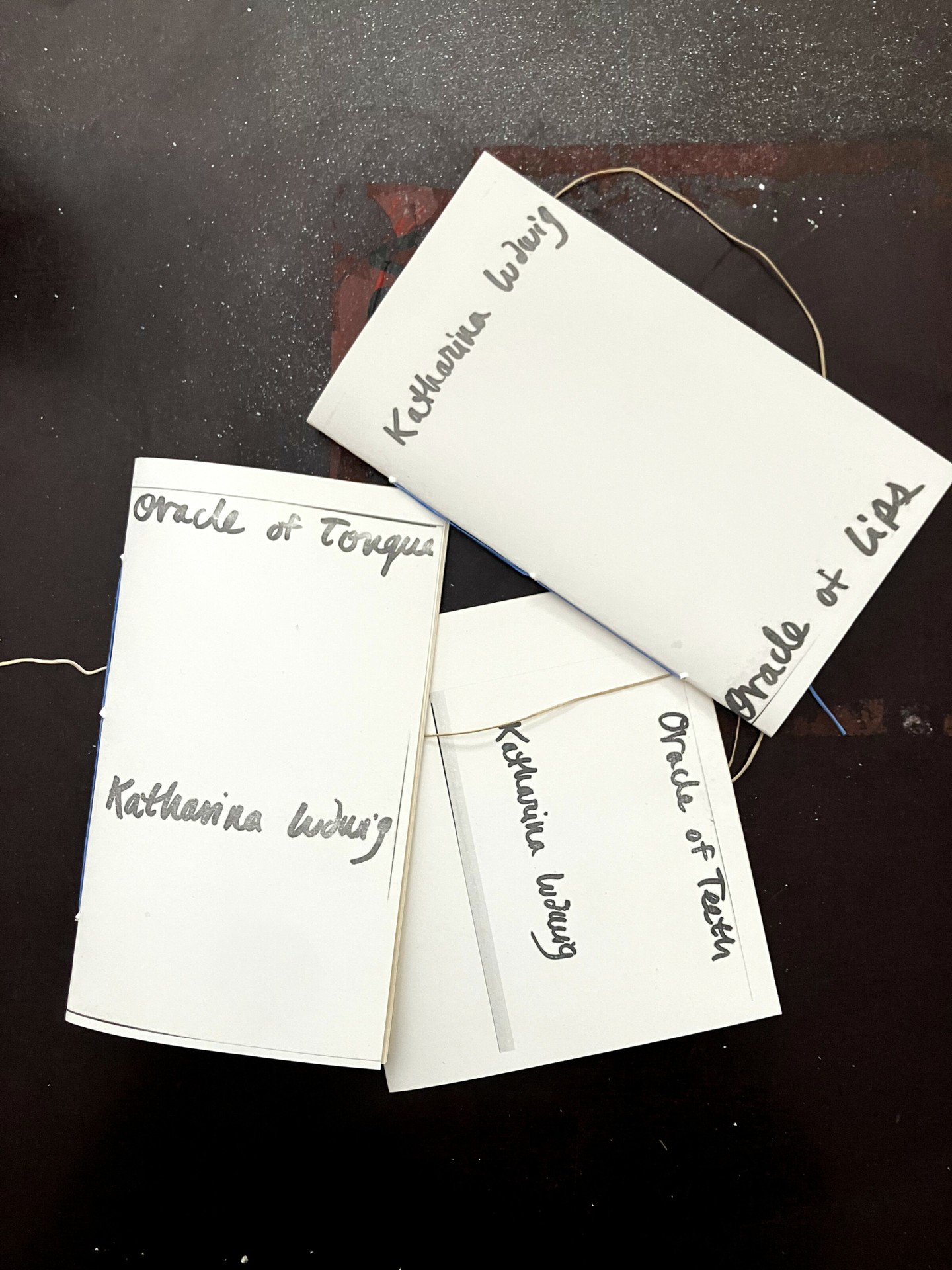
Three opuscules, published by Cutt Press, 2026.
Edition of 200 / Each edition is composed of three pamphlets bound together (by The Oracle of Teeth)
Could a narrative hole, this moment where the text stops, be a text-mouth? We speak of (written) text having a body, a head(ing), foot(notes), a voice. And if there’s a voice there could be a mouth, too. A mouth that speaks/voices into the body of the text. A speaking hole for once, not a gap, a caesura, a lacuna, a wound, but a hole endowed with a voice—or voices
Three opuscules, published in parallel/in interruption with THE HOLE. AN INSURRECTIONARY POETICS: The Oracle of Lips, The Oracle of Tongue, and The Oracle of Teeth.
Permanent Record: Poetics Towards The Archive | The Collection of Un–Healing
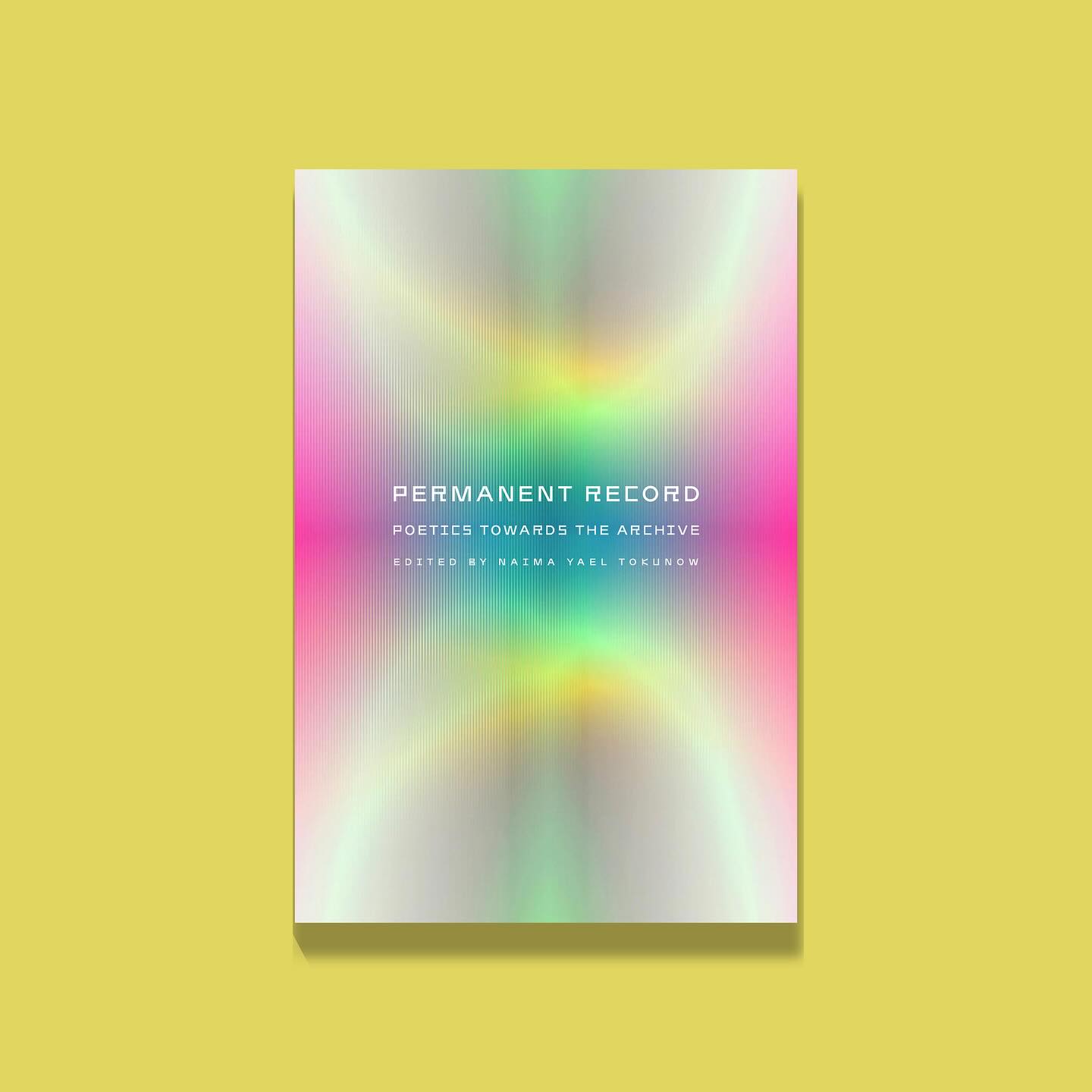
Edited by Naima Yael Tokunow
Inspired by Naima Yael Tokunow’s research into the Black American record (and its purposeful scarceness), Permanent Record asks, what do we gain when we engage with our flawed cultural systems of remembrance? How does questioning and creating a deep relationship to the archive, and in some cases, spinning thread from air where there is none, allow us to prefigure the world that we want? Including reflections on identity and language, diasporic and first generation lived experiences, and responses to the ways the record upholds harm and provides incomplete understandings, Permanent Record hopes to reframe what gets to be a part of collective remembrance, exploring “possibilities for speculating beyond recorded multiplicity.”
Review by Megan Mckenzie in Cleveland Review of Books
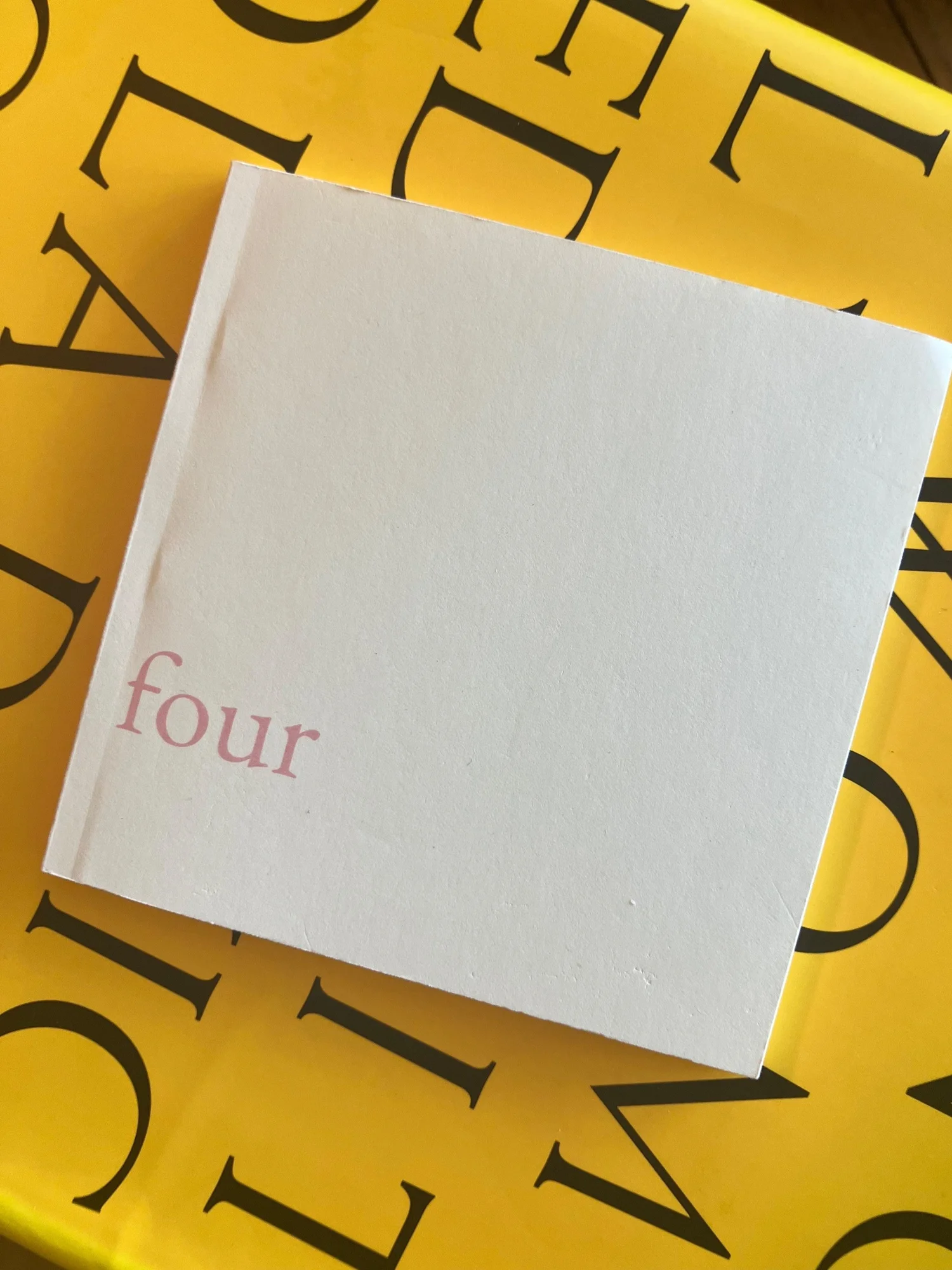
Tripwire 19 | I’m always happy to see you the next Day To be sure we didn’t die
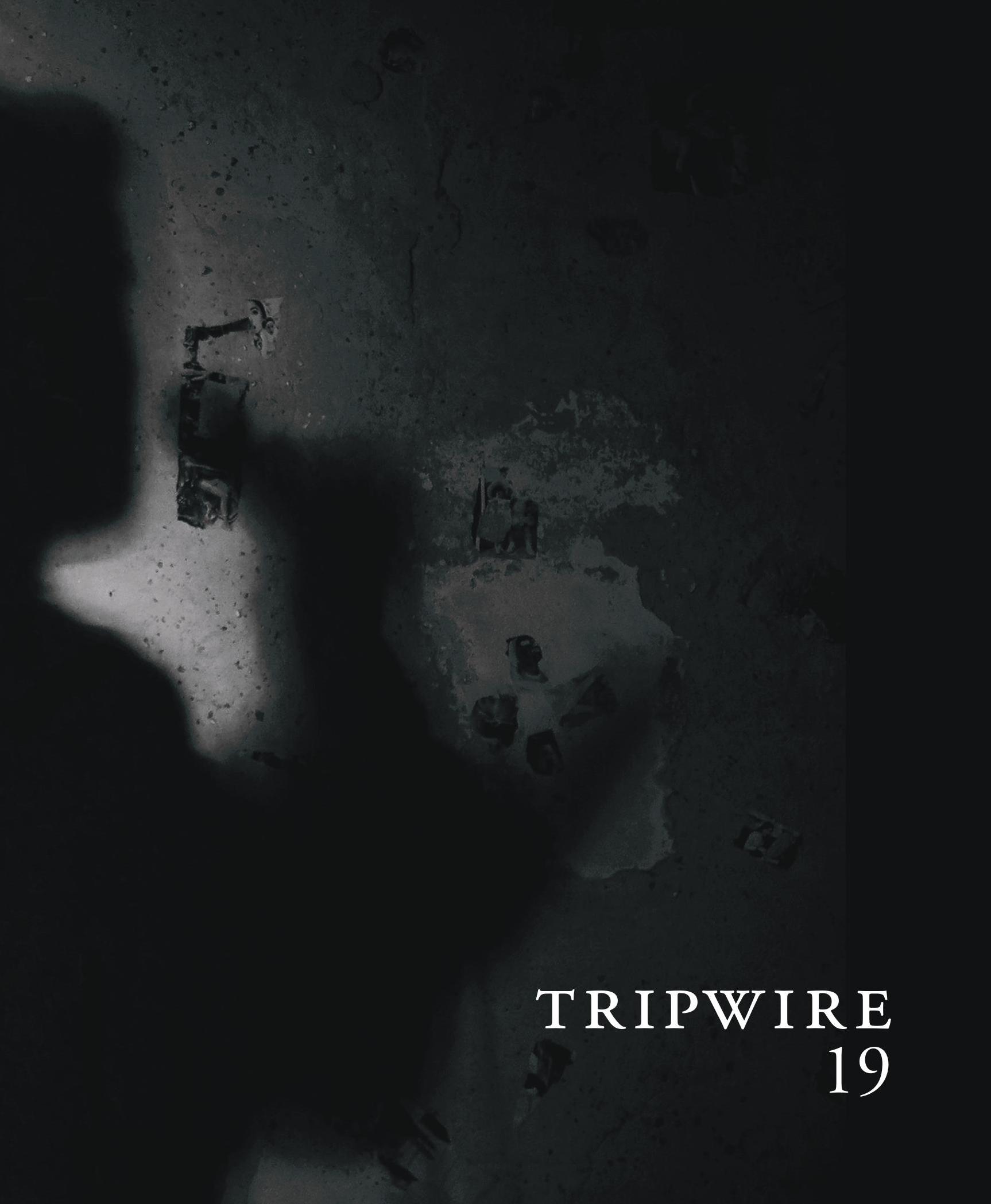
Prose poem and 'Sean Bonney in Berlin: A Conversation Between His Friends' with Max Henninger, Sacha Kahir, Uwe Möllhusen and Marie Schubenz.
In memory of Sean Bonney, Diane di Prima, Jack Hirschman, Bernadette Mayer, Etel Adnan, Kamau Brathwaite, Keith Waldrop & all the others
Goldsmiths publication | Preliminary glossary for Wet Muscle
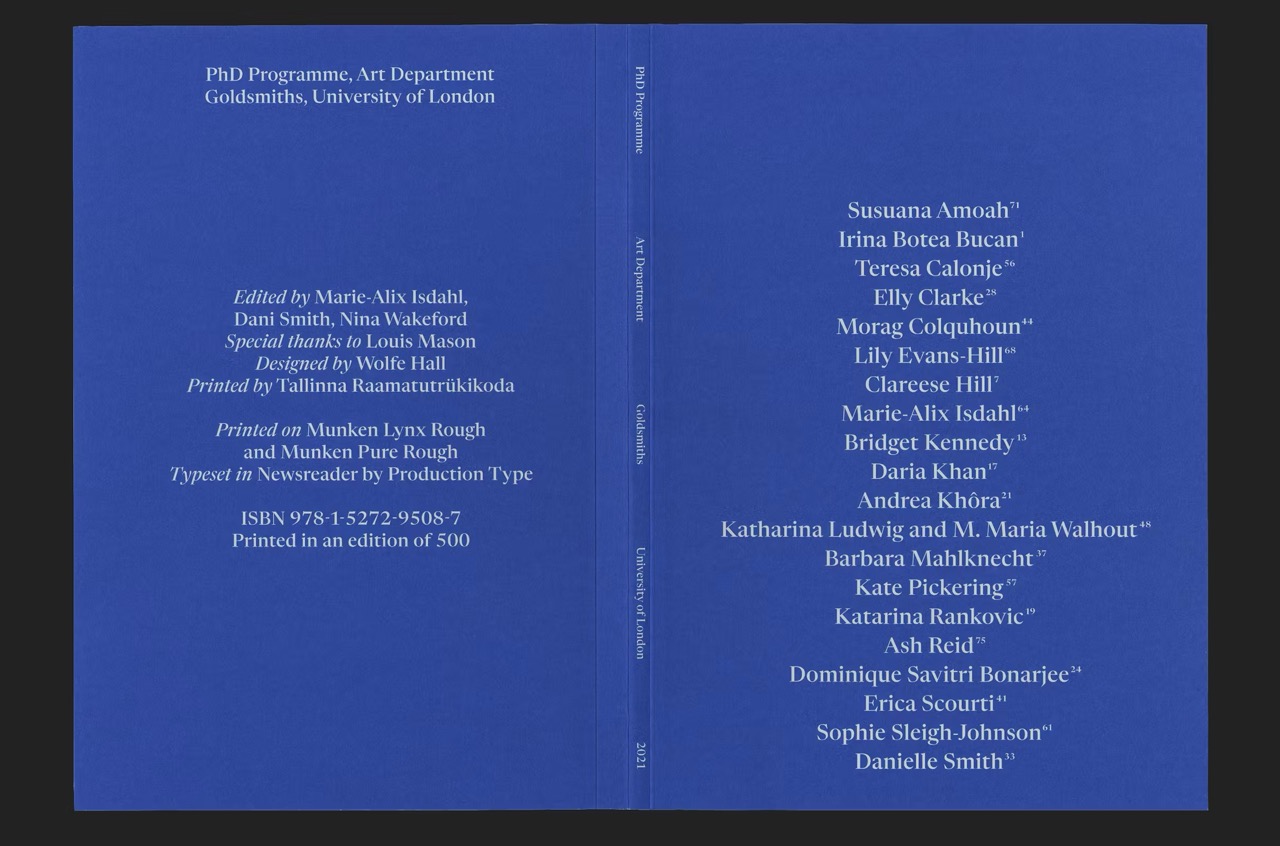
In collaboration with M. Maria Walhout. Edited by Marie-Alix Isdahl, Dani Smith, Nina Wakeford
The publication brings together contributions from PhD researchers in the Art Department at Goldsmiths, University of London. Exhibiting an extensive range of material exploration and subject matter, the publication provides an intimate glimpse into practice-based research projects at disparate stages of development. Entries materialise as excerpts, excess, studio residue, and field notes, capturing fragments from long-term projects, and moments of play from newly sparked curiosities and quarantine experimentation.
Taken together, they exhibit the wide range of innovative approaches being employed across the Art Research programme.
As we found ourselves scattered across the globe this academic year, the organic process of cross-pollination amongst researchers through chance encounters and casual conversation became obsolete.
The publication rekindles lost connections while revealing fresh ones and offers the opportunity for our work to exist in the same physical space once more.
The Graveside Orations of Carl Einstein | Ein Stein inmitten von zehn Gräbern
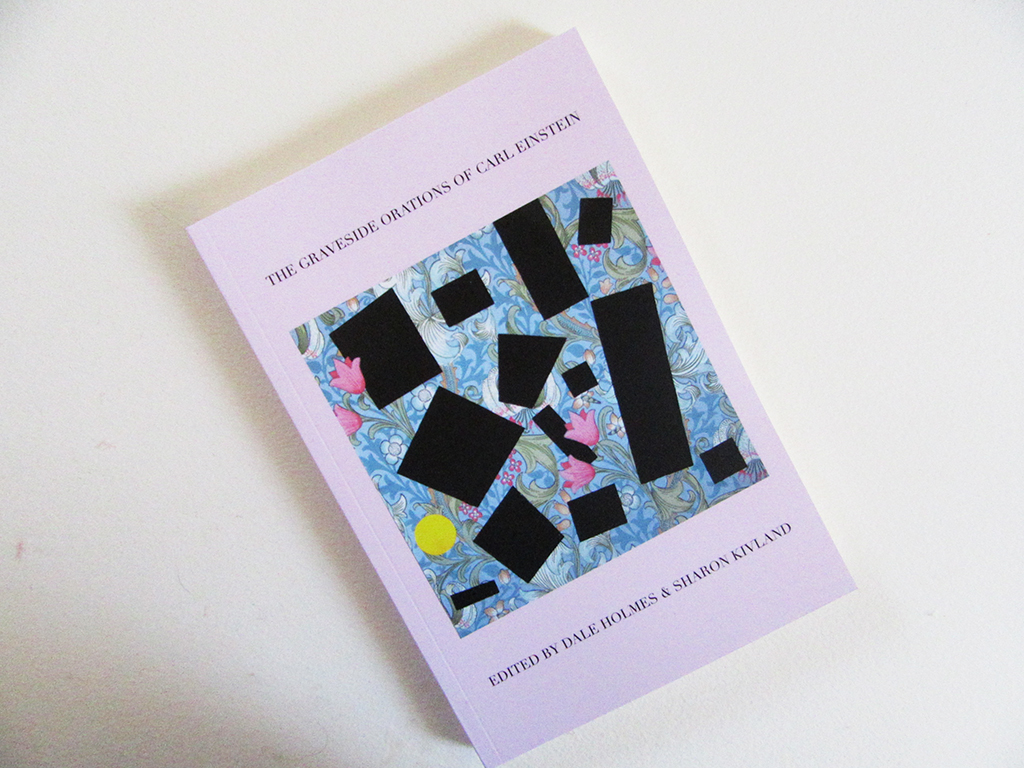
Edited by Sharon Kivland & Dale Holmes
At the memorial for Rosa Luxemburg on 13 June 1919, the political radical, art historian, critic, and writer Carl Einstein gave an oration. There is no record of what Einstein said, how he said it, or what it addressed. This collection assembles a broad range of texts from artists, film-makers, writers, poets, critics, philosophers, and art historians. Each contribution is a speculation on what Einstein might have delivered, each as likely and as unlikely to be Einstein’s as any other. Through the multiple substitutions of Carl Einstein—a practice that Einstein pursued throughout his life—themes of masquerade, mistaken identities, of persons substituted after the event, of orations, speeches, and texts rewritten, speculated upon and redelivered, celebrating, mapping, and fictionalising a past life, are explored.
FELT – The Aesthetics of Grey | Growth
Edited by Christian Patracchini
FELT – Aesthetics of Grey is the second of a series of anthologies published by ZenoPress. A new collection of writings including essays, experimental texts and short stories. Featuring works by artists and writers who have been invited to respond creatively to the colour Grey.
ON CARE | Woundlickers (Hexameters)
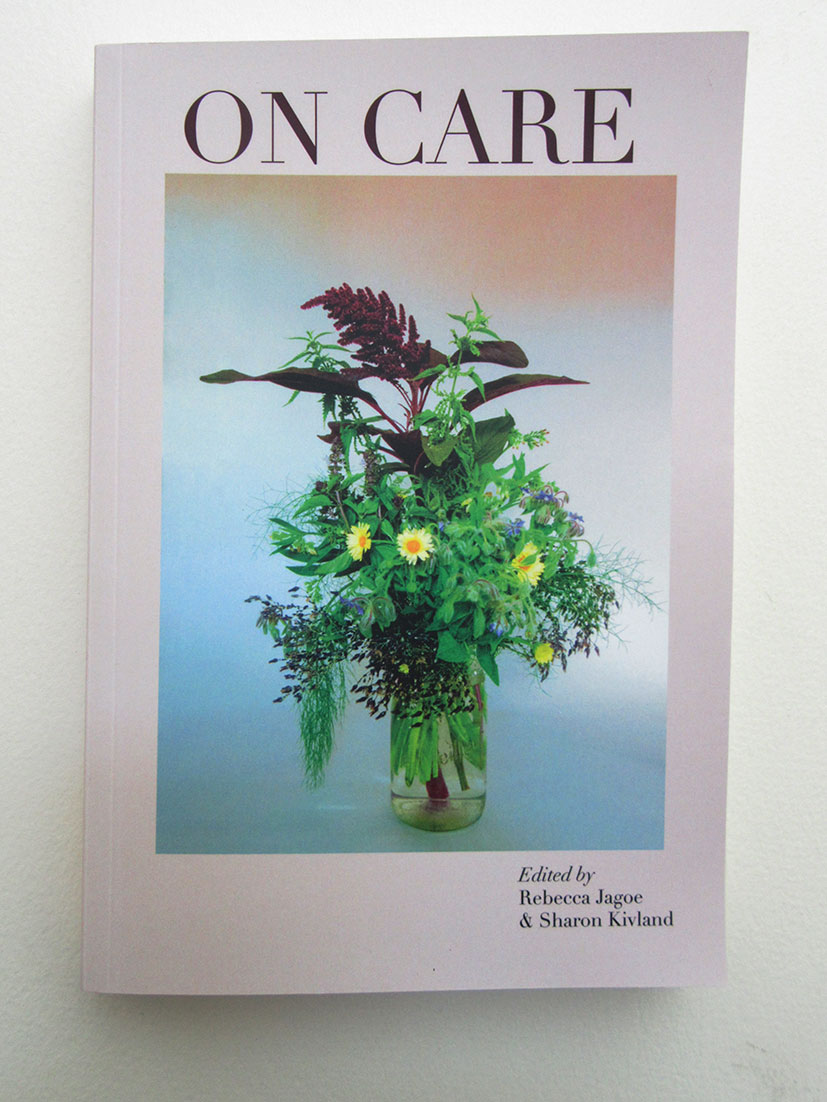
Edited by Rebecca Jagoe & Sharon Kivland
Care is a matter of responsibility for human and nonhuman allies, an ecological network. Care is an imperative, and acting with care approaches the world beyond selfhood. ON CARE, an aggregate of voices, discusses the politics of caring, support, and the role of welfare in an increasingly neoliberal society. It questions who is seen as worthy of care, whose narratives are given attention, and whose lives are overlooked in a complex web of assemblages: conceptions of medical authority, the co-option of self-care in political rhetoric, care as a commodity in the hospitality industry, intergenerational intimacy, sexecology; care as utopian and care as transactional. ON CARE maps a constellation of perspectives, as testaments, fictions, and essays, addressing the relation between good health, interdependence, and the ethics of (self)care.
Salon for a Speculative Future | My Friends Are Blackbirds (for Katerina Gogou)
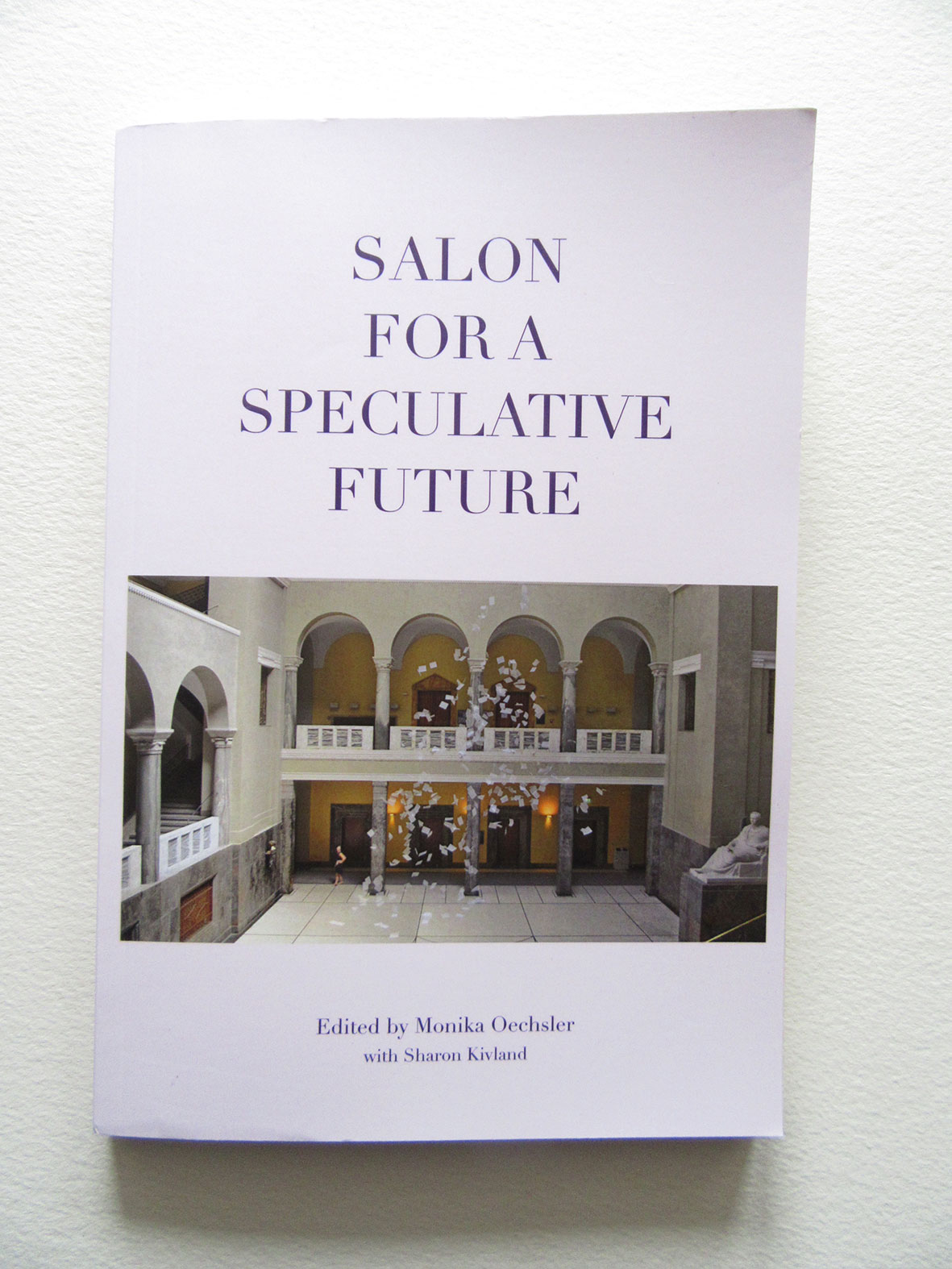
Edited by Monika Oechsler & Sharon Kivland
The Salon for a Speculative Future was inaugurated in March 2019 in celebration of Women’s History Month, as a platform for cross-generational and cross-disciplinary exchange. Reflecting on the current political and economic global situation, in particular the exponential acceleration of a technology-driven platform capitalism, many women advocate positive change for an ecologically sustainable and humane future. In The Left Hand of Darkness, Ursula K. Le Guin argues that science fiction does not simply extrapolate from the present to predict the future—instead, the fiction writer engages in thought-experiments where ideas and intuition move within the confines set by the experiment. This book hosts imaginative thinking by seventy-five women artists, sharing their influences, inspired by women’s contributions to diverse fields, from art, education, and science to political activism. Salon for a Speculative Future honours and shares insights and experimental thinking towards a positive future.